
Cleaning crew scheduling
Crew scheduling for cleaning companies that stays clear.
Crew scheduling for cleaning companies starts with the work each site needs, not a blank calendar. Connect the recurring visit, crew, access notes, scope, and proof of service so a change reaches the people doing the job before it becomes a missed clean.
Crew scheduling method
Build the schedule around the site
A commercial cleaning schedule is more than a date and a cleaner’s name. Start with the service location, access window, frequency, scope, estimated duration, security steps, equipment, and required skills. Then place the visit on a day and time the crew can actually cover. This site-first order matters because two jobs that both say “Tuesday evening” may need different keys, floor equipment, languages, or building contacts. Keep the contract schedule and the working schedule connected. The contract records what the client approved. The working schedule shows the exact visit the office and crew must deliver. When those records drift apart, the team can complete the calendar and still miss the client’s expectation.
Open the related Cleanly resourceCreate the recurring pattern once
Recurring cleaning jobs should not be rebuilt from memory every week. Record the repeat pattern, start date, service window, location, standard scope, assigned crew, and any periodic work that follows a different rhythm. Review the generated visits for holidays, client closures, building events, and months with an extra service day. A recurring rule is a starting point, not permission to stop looking ahead. Keep one-time changes attached to the affected visit so the base schedule remains useful. If the client moves one clean, change that visit rather than silently changing every future visit. Cleanly keeps recurring jobs and their scheduled visits connected, which gives the office one place to see the pattern and the exception.
Open the related Cleanly resourceMatch the crew to the job requirements
Assign crews after you know what the site requires. Check availability, travel between jobs, estimated service time, building access, equipment, language needs, training, and whether a supervisor must be present. Avoid filling every open space until the calendar looks full. A route with no room for travel, supply pickup, a late client, or a locked door is already behind before the shift begins. Keep responsibilities clear when more than one person is assigned. Name the crew lead, identify who carries access credentials or equipment, and make sure every cleaner can see the same current job instructions. The schedule should reduce questions at arrival, not move them into a new group text.
Open the related Cleanly resourcePut the instructions on the visit
The assigned cleaner should not have to search old messages for the alarm code process, parking entrance, supply location, or client request. Put the address, arrival window, site contact, access steps, scope, checklist, safety notes, equipment, and approved changes on the visit. Separate permanent site instructions from notes that apply only tonight. Keep sensitive information available only to the people who need it, and replace it when the client changes access. Write instructions in plain language that the crew can follow on a phone. If your team works in more than one language, confirm that the important job details are understood before the first service rather than relying on a rushed translation at the door.
Handle callouts without losing the account context
A callout creates two jobs for the office: find coverage and transfer the site knowledge. First confirm whether the assigned crew can still cover part of the visit. Then review available cleaners who meet the site requirements and can reach the location without breaking another commitment. When you reassign the work, send the replacement crew the current visit record, not a screenshot of the old calendar. Notify the client only when the agreement or service situation calls for it, and keep the update factual. Record who accepted the change and when. After the shift, review whether the schedule needs more backup capacity, cross-training, or a different crew plan. One absence should not force the owner to rebuild the whole week.
Confirm arrival and proof of service
The schedule says what should happen. Proof of service records what did happen. Use a consistent check-in and check-out process, completed checklist, notes, and required photos for each visit. Review missing or unusual proof while the details are still fresh. A late check-in may mean traffic, a locked entrance, a schedule mistake, or a crew using the wrong job record; the time alone does not explain the cause. Tie the proof to the site and visit so the office can answer a client question without asking three people to search their phones. Cleanly connects geofenced check-in, job details, checklists, notes, and photos to the scheduled work.
Open the related Cleanly resourceUse the schedule to review capacity
Look ahead before promising another account. Review committed crew time, travel, access windows, periodic tasks, supervisor coverage, and the space left for changes. Capacity is not only the number of cleaners on the team. It depends on where the work is, when clients allow access, which skills or equipment a site needs, and how much time the current accounts actually take. Compare scheduled time with completed-work records and adjust estimates when the same type of visit regularly runs longer. Keep a small operating cushion based on your own history rather than copying a staffing benchmark from another company. A clear schedule helps you see whether the next contract fits before the sales promise becomes an operations problem.
Keep the schedule connected
Plan the visit, guide the crew, and keep the proof.
Use one current record for the recurring job, site instructions, changes, and completed work.
Schedule and dispatch
Keep jobs, crews, locations, and changes together on one calendar.
Read more →
Give crews the current job record
Share today’s jobs, site instructions, checklists, and messages in the crew app.
Read more →
Keep proof with the visit
Connect check-in, notes, checklists, and photos to the scheduled cleaning job.
Read more →
Run the whole commercial cleaning workflow
Connect recurring jobs, crew coordination, client records, and payment in one place.
Read more →
Cleaning crew scheduling questions
Build the schedule around the site, then keep every change on the visit.
Straight answers. Ask the rest on the call.
How do you schedule recurring cleaning jobs?+
Start with the site, service days, access window, scope, estimated time, and required skills. Build the recurring pattern once, assign a crew that can meet those requirements, and review future visits for holidays, client closures, and planned periodic work.
What information should crews see?+
Crews should see the address, arrival window, access instructions, site contact, scope, checklist, safety notes, supplies or equipment, and any approved change for that visit. Keep sensitive details limited to the people who need them.
How should schedule changes reach cleaners?+
Update the shared job record first, then notify the assigned cleaners through the channel your business uses for urgent changes. Ask for confirmation when a change affects the crew, arrival time, access, or scope so silence is not mistaken for acceptance.
How do owners confirm completion?+
Use a consistent proof-of-service record such as check-in and check-out, a completed checklist, notes, and required photos. Review exceptions against the scheduled visit instead of asking the crew to rebuild the story later from a group chat.
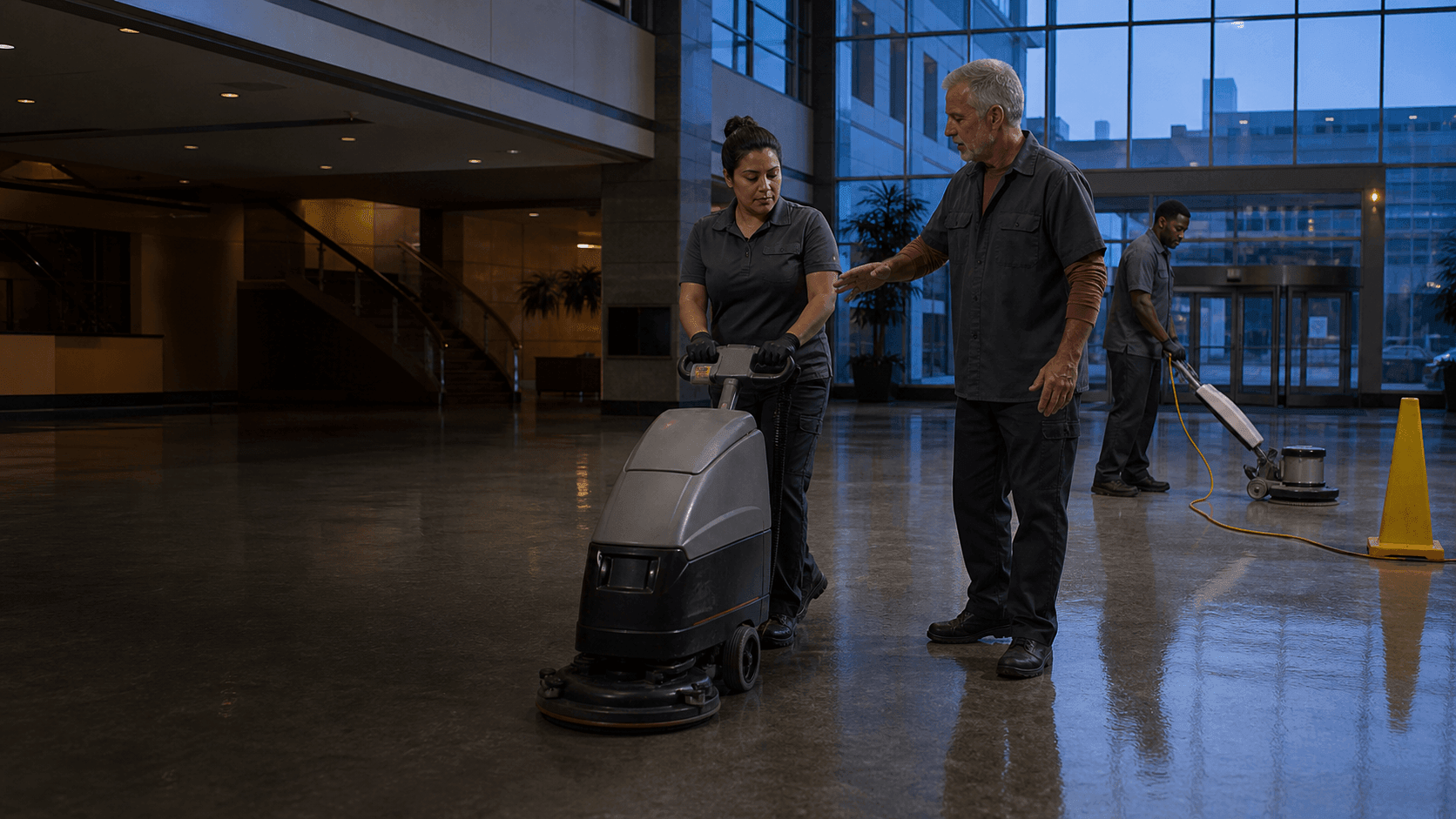
Keep the crew, site, and change on the same schedule.
Connect recurring jobs, crew instructions, schedule changes, and proof of service in Cleanly.
From recurring job to completed visit